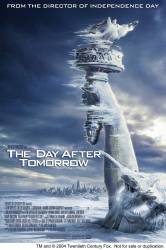
Question: Why would Sam and his friends go to the library?
Answer: It was the closest building they could access. While the smarter move would have been to just go back to JD's apartment (which Brian and Laura suggest) it may have been too far a walk to get out of the flooding streets.
Why did they burn the books and not the wooden shelves that the books were on?
As for burning books rather than shelves, it was just easier. They would have had to expend more energy to break down the shelves into manageable size.
They burn books instead of the wooden shelves because burning books is a quicker and more efficient way to generate heat in a desperate situation, as the paper readily catches fire and produces a substantial amount of heat compared to solid wood, which might take longer to burn properly.
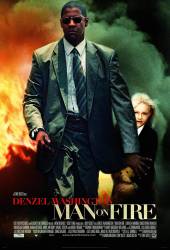
Question: Is this a true story? The ending with text "John W. Creasy" and lifetime dates makes it seem like a true story.
Answer: Daniel "La Voz" Sanchez was based off the kidnapper Daniel Arizmendi López and Aurelio Sanchez was based off his bother Aurelio Arizmendi López, so some of it maybe true but not a lot.
Answer: No, the movie was based on a fiction book. The book takes place in Italy, and the kidnapping ring is run by the mafia.
Answer: The movie was completely lifted from a much better 1987 version of the same story.
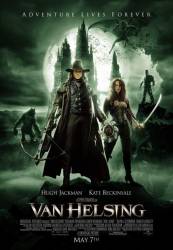
Question: In the beginning of the film, where Dracula is talking to Viktor vonFrankenstein, he slams the chest shut and begins yelling at him. Before this, Viktor was looking over his shoulder and his attention immediately snaps back to Dracula, but he then turns once more to look behind him before staring at Dracula again, can someone explain why he looks over his shoulder a second time?
Answer: During their conversation Dracula is able to move around the room without Viktor noticing it. Then Dracula is standing on top of the fireplace behind Viktor, that's why he turns his head the first time. When Dracula suddenly slams the chest Viktor is surprised to see Dracula suddenly standing in front of him so he instinctively turn his head to look at the fireplace to believe his own eyes.
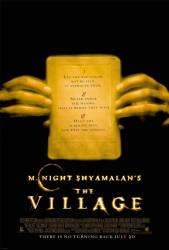
Question: Does anyone know if Noah knew all along that the elders were dressing up as the "monsters?" I think he did, and that he thought it was just a game. Is that why he laughed and clapped every time the bell went off and they had to hide? Perhaps the elders didn't hide this from him because he was simple-minded and couldn't talk. So, when he went after Ivy in the woods, he thought it was all for fun. Does anyone else agree with this?
Answer: When the Elders found Noah missing, they referred to a costume that had been hidden under the floorboards. My guess is that at some stage Noah found that costume and may have figured out that it was a game then. I doubt if the Elders realized this until he went missing. Also, given that Noah had already stabbed Lucius, I don't really think that he was joking when he went for Ivy in the woods.
Answer: Noah had figured out shortly before the movie begins that the monsters were a hoax made by the Elders, having found a creature suit in the "punishment room." This can be seen early when everyone is eating. They hear howling from the woods (it's actually sound devices in a big tree deep in the forest that create sounds from the wind), and Noah simply laughs at it. He probably thought it was all a game, never understanding the true purpose of why the Elders created the hoax. During the Covington Woods quest, he most likely went to kill Ivy. Recall the "daring game" played by the children. We learn that creatures imitate their victim before they attack. Noah does the same to Ivy. She snaps her cane, and the creature also snaps something. She throws a rock, he does the same. Noah was actually smarter than we think. He was THE creature, the usurper of the Elders' hoax. So, he tortures Ivy mentally first before trying to kill her. He was kinda sadistic (he also massacred the livestock).
Question: During point of no return, the phantom has no disguise on. If everyone was after him, why didn't anyone stop the performance and capture the phantom?
Answer: During "Point of No Return, " the Phantom shares a stage with the very vulnerable Christine. He is still masked, though it is a mask other than his trademark white face covering. The Phantom is well known as a murderer and an escape artist. This is the the equivalent of a hostage situation. To rush the stage might risk lives, and everyone in the know is proceeding with caution. During the song, we do get glimpses of police moving about, and Raoul and others looking concerned, subtly signaling one another and considering their next move. The stage crew seems confused. The dancers go on with the show. And law enforcement officers await the right moment to advance. It also gives us the opportunity to enjoy a dramatic musical number that rushing the stage would interrupt.
Question: At the end of the credits, we hear Johnny Depp sing "mama's little baby loves shortnin' bread." Is there any reason for this, or a tie-in to the movie I missed?
Chosen answer: An additional reference to the full dominant personality takeover of Shooter, everything gravitates South Mississippi.
Question: This question applies to the whole series. Why do some of the people who actually manage to survive Jigsaw's traps end up working with him instead of either helping capture him or killing him and insuring that no more innocent people get killed?
Answer: Jigsaw's traps would more than likely leave a person mentally unstable, which could result in Stockholm Syndrome, a condition which involves a victim sympathising with their captor. In fact, after Lawrence Gordon escapes the bathroom after severing his own foot, Jigsaw nursed him back to full health, thus gaining his trust (this is shown in Saw VII). He also plays mind games on people, which is shown in a flashback in Saw III in which he convinced Amanda to side with him. In her unstable state of mind, she realised that he was the first person in her life she could actually relate to, and thus became an accomplice.
Question: I'm guessing that Evan can travel back to "memories" an infinite amount of times as he has been to the junkyard and the basement memories at least twice, but what I don't get is why, after he saw the horrible repercussions of giving Lenny the shard which led to the psychotic brother's death, why didn't Evan just NOT give Lenny the shard, but still give the bro the moving motivational speech that made him rethink the burning of the dog? Then the dog would be safe and the bro wouldn't be killed traumatically, damaging Kaylee? Why didn't he keep that bit that seemed to work out, but not give Lenny the weapon?
Answer: The point of the movie was that, no matter what he did and how he tried to change things, they always ended up bad. If he went back and did that, something unforseen would have happened to make things terrible. Evan realized that everything bad that happened to them was because of him. He then decided the only safe way to make things right is if he just took himself out of their lives all together. That's the logic the filmmakers went by, if you don't want to accept that, then you will just have to consider it a plot hole.
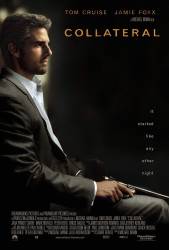
Question: I noticed from the previews that this movie looks very different. What is it? Is it a digital camera that has been used? Or no lighting effects used? The movie really has a "behind the scene" feel.
Chosen answer: It was shot with a digital camera. IMDB is a great place to answer questions like this. Go to *Technical Specifications* in the *Other Info* section of the menu on the left hand side of the screen. In an interview in American Cinematographer, Michael Mann said that as far as he was aware, this was one of the first movies to attempt to make a "look" out of digital video rather than trying to make Digital Video look like film. This approach meant the movie could be shot in the low-light scenes of urban desolation Mann wanted - because Digital reacts much better to low light than film. The approximately 20% of the picture that was shot on film was mostly, according to Mann, the portion set in the "Fever" nightclub - because this is the scene with the brightest lighting states, a condition in which Digital Video does not perform as well.

Question: If Lanning really had leaped from that distance, wouldn't he be unrecognizable upon impact and not with only a little bit of blood coming from his mouth?
Question: When Bruce Willis, Julia Roberts and what's left of the gang go to the museum, several people tell Willis how much they liked him in "that one movie". Then they add something like "I knew it when she didn't speak to you in the restaurant". Are they referring to an actual movie?
Answer: The Sixth Sense. They mean that they figured out the true nature of his character when his wife doesn't directly acknowledge his presence in a restaurant.
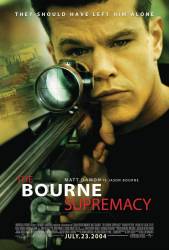
Question: When Bourne interrogates Nikki (under duress) in the underground station, Nikki insists that Bourne had never worked in Berlin, much less completed his first mission there. But it is established that Bourne had killed the Neskis in Berlin on what is described by Conklin as his first mission. Assuming Nikki has no reason to lie and that she would have accurate information about Bourne's activities, what might explain that issue?
Chosen answer: Conklin ordered Bourne to kill the Neskis, telling him it was a training mission, when in fact it was an unofficial, off-the-books assignment to cover up his and Abbott's corrupt dealings with Gretkov, which Neski was about to expose. Nicky did not know about this Berlin mission as it was not an official Treadstone operation.
Conklin did not tell Bourne that it was a training mission. Conklin told Bourne "this is not a drill soldier...this is a live project, you're a go."
Partially correct. After Bourne eliminates the Neskis, Conklin says "Congratulations soldier, training is over." This implies that while the mission was real, Bourne was still an asset in training, and off the books.
By "not a drill" and "live project", Conklin is telling Bourne to actually kill the Neskis - like killing the hooded man for Hirsch, it's training him to do anything for Treadstone. It could be that the edit is out of chronological order, but the order of the scenes implies that after Bourne has done the job and returned to the car, Conklin says "Congratulations, soldier. Training is over."
Answer: Conklin was using Bourne for an off-book hit on the Neskis because Neski knew about the stolen money and the oil leases. Bourne was told it was a genuine "hit" for patriotic purposes, but it was not.
Question: What exactly is the experiment all about?
Answer: To test the bond between children and their parents.
Question: How is Dash Parr able to run across water?
Chosen answer: If any object can move across the water quickly enough, the weight isn't transferred completely. In some Scandinavian countries, they actually DRIVE very quickly across water in adapted vehicles. If the character of Dash could actually run that fast, it is feasible and possible for him to run on the water's surface.
Question: When Ben and the others enter the treasure room, who's carrying the Declaration of Independence?
Chosen answer: Abigail.
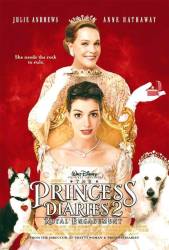
Question: Why wasn't Anne Hathaway used in the beginning scenes of the movies when we see Princess Mia at her graduation but only the back of her, a headless shot on the airplane and only her cat gets out of the limo when they arrive at the castle? We don't actually see her until she appears on the balcony in the red strapless gown for her 21st birthday celebration ball.
Answer: I wonder about this too. It could be for dramatic purposes before the balcony scene. But graduation scene is definitely not Anne. The girl's hair looked thicker than of Anne's.
Answer: I had the very same question it wasn't until the third scene that they show her face.
Answer: You actually DO see her face at the college graduation. After the ceremony, she is holding her diploma and talking to her two friends. She tells one "Thank your mom for all the cookies", and then Joe tells her that they need to leave to get on the plane.
Answer: But they never show her face until she is on the plane.
Question: Who was supplying the Hutu army?
Answer: French.
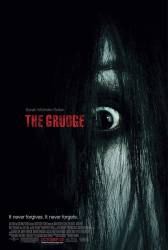
Question: How exactly does the father kill the wife? I noticed when she comes down the stairs she comes out of a bloody bag. So how is she killed?
Answer: Well, in the Japanese original (Ju-On: The Grudge), it shows that Takeo, the father, killed his wife by shoving a knife down her throat or something similar to that. When he was killing her, she tried to scream, except her scream came out all messed up (because the knife hit the vocal chords), which explains the horrible croaking noise. There's no doubt about it that it's the way she was killed in this version.
Answer: Another website states that after pushing her down, Kayako sprained her ankle and crawled down the stairs, only to realise Takeo was slowly following her from behind watching her suffer. He then snapped her neck, but she was still alive and could only make the croaking noise. It is also implied that he stabbed her multiple times afterwards, which could explain the bloody corpse.
Answer: Possibly because it was the closest building with height to it as they are about to be hit by a gigantic wave of water. There was no snow yet, so I don't believe burning books or snow was on anybody's mind yet. It turned out to be a great idea as snow soon starts to fall and those books were literally a life saver.
Susan D. Santos